

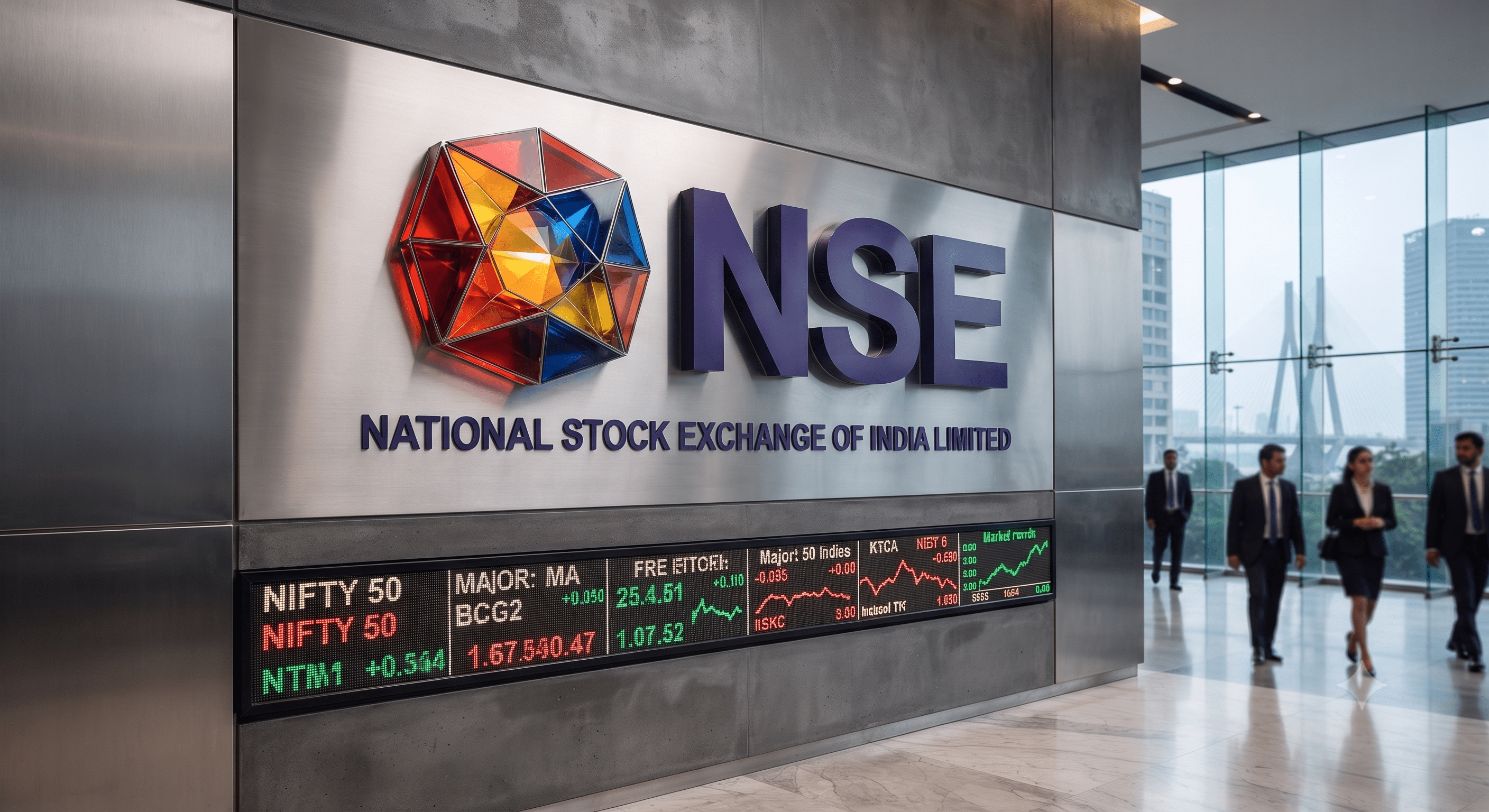
India’s capital market is currently gearing up for what could be the most anticipated financial event of the decade. The National Stock Exchange of India (NSE) has officially filed its Draft Red Herring Prospectus (DRHP) with the Securities and Exchange Board of India (SEBI). For years, retail and institutional investors alike have eagerly awaited the chance to own a piece of India’s largest stock exchange. With the 2026 DRHP filing, the regulatory wheels are finally in motion.
In this comprehensive guide, we will break down everything you need to know about the upcoming NSE IPO, including its offer structure, FY26 financial performance, unlisted share price valuation, and why global brokerage firm Jefferies is incredibly bullish on the listing.
The DRHP Filing: Key Takeaways
While the filing of a DRHP does not mean the IPO will open tomorrow, it formally kicks off the regulatory approval process. Based on the 2026 DRHP documents, here are the core details of the offering:
- 100% Offer for Sale (OFS): The IPO will not include a fresh issue of shares. It is entirely an OFS of up to 14.89 crore (14,89,05,525) equity shares by existing shareholders.
- No Fresh Capital for NSE: Because it is a pure OFS, all funds raised will go to the selling shareholders, not to the exchange itself.
- Major Sellers: The State Bank of India (SBI) is expected to be the largest selling shareholder, proposing to offload up to 2.48 crore shares.
- Listing Venue: Under existing regulations, a stock exchange cannot list its shares on its own trading platform. Therefore, NSE will list its shares on its rival exchange, the BSE (Bombay Stock Exchange).
- Estimated Issue Size: Market reports suggest the total issue size could hover around ₹30,000 crore, pending final pricing.
Deep Dive into NSE’s FY26 Financials
Understanding an exchange’s financials is crucial before investing. The NSE boasts a highly profitable, asset-light business model, though FY26 saw a slight moderation in its massive growth streak due to normalized trading activities.
NSE Financial Performance (FY26 vs FY25)
| Particulars | FY26 | FY25 | YoY Change |
| Revenue from Operations | ₹16,601 Crore | ₹17,141 Crore | -3.1% |
| Total Income | ₹18,713 Crore | ₹19,177 Crore | -2.4% |
| Profit Before Tax | ₹13,896 Crore | ₹15,475 Crore | -10.2% |
| Profit After Tax (PAT) | ₹10,302 Crore | ₹12,188 Crore | -15.5% |
| Total Assets | ₹87,937 Crore | ₹69,467 Crore | +26.6% |
| Total Equity | ₹32,114 Crore | ₹30,353 Crore | +5.8% |
Key Takeaway: For FY26, NSE reported a 15.5% drop in Profit After Tax (PAT) to ₹10,302 crore. This decline was primarily driven by lower transaction charge income and lower clearing/settlement income as market trading activity moderated throughout the year. Despite this slight dip, the exchange continues to boast exceptionally high operating margins and massive cash generation capabilities.
The Unlisted Market: NSE Share Price & Valuation
One of the biggest talking points surrounding the NSE IPO is its towering valuation. Because the stock is not yet publicly traded, investors look to the unlisted (pre-IPO) market to gauge its worth.
- Current Unlisted Share Price: Following the DRHP filing, indicative prices for NSE’s unlisted shares are hovering between ₹2,050 and ₹2,100 per share.
- 52-Week Range: The unlisted stock has traded within a range of ₹1,867 to ₹2,269 over the past year.
- Implied Valuation: Based on these prevailing market transactions, NSE commands an implied market capitalization of over ₹5 trillion (₹5 lakh crore). If priced at this valuation, it would make the NSE one of India’s most valuable companies and cement this offering as one of the largest IPOs in the history of the Indian capital markets.
The Jefferies View: “The Final Piece” of the Troika
Global investment bank Jefferies recently initiated coverage on the upcoming IPO, expressing a highly bullish outlook. They aptly described the NSE as the “final piece in India’s exchange troika,” noting that its listing will complete the publicly traded ecosystem alongside BSE and MCX.
Here is why Jefferies believes NSE stands out on a global scale:
- Absolute Market Dominance: The NSE commands an incredible 90%+ market share across key segments, particularly in equity derivatives and cash equities. This creates a massive network effect—liquidity attracts more liquidity, making it nearly impossible for competitors to dethrone it.
- Stellar Operating Margins: Jefferies highlighted the exchange’s consistent, robust cash generation and premium return ratios.
- Asset-Light Moat: Unlike manufacturing companies, stock exchanges require limited ongoing capital expenditure. Once the technological infrastructure is built, higher trading volumes bring in more revenue with minimal incremental costs.
Potential Risks for Investors
While the NSE is a fundamentally stellar business, retail investors should not blindly invest based on brand hype. Keep an eye on these risk factors:
- Valuation Risk: With an expected ₹5 lakh crore valuation, the IPO might be aggressively priced. Investors should compare NSE’s final Price-to-Earnings (P/E) multiple with BSE’s listed P/E ratio to ensure they aren’t overpaying.
- Regulatory Dependency: The exchange business is heavily tethered to SEBI policies. Any strict new regulations on equity derivatives trading could directly impact NSE’s transaction revenue.
- OFS Structure: As a 100% Offer for Sale, none of the ₹30,000 crore raised will go toward growing the company’s business.
Check the Latest Unlisted Company Share Prices
Looking for the latest prices of unlisted companies? Get real-time market updates, expert investment guidance, secure transactions, and complete assistance from RITS Capital.
Conclusion
The NSE IPO is shaping up to be a landmark event for the Indian capital markets in 2026. The exchange offers unmatched market leadership, incredible profit margins, and a structural growth story as India’s financialization deepens. However, savvy investors should practice patience. Wait for SEBI’s final approval, analyze the finalized Red Herring Prospectus (RHP) for the exact price band, and evaluate the final valuations before hitting the “apply” button.
Zee Business: Jefferies’ View on the Mega NSE IPO
This video provides an in-depth news breakdown of Jefferies’ bullish report on the NSE IPO and discusses its dominant market share and potential as India’s largest public listing.