

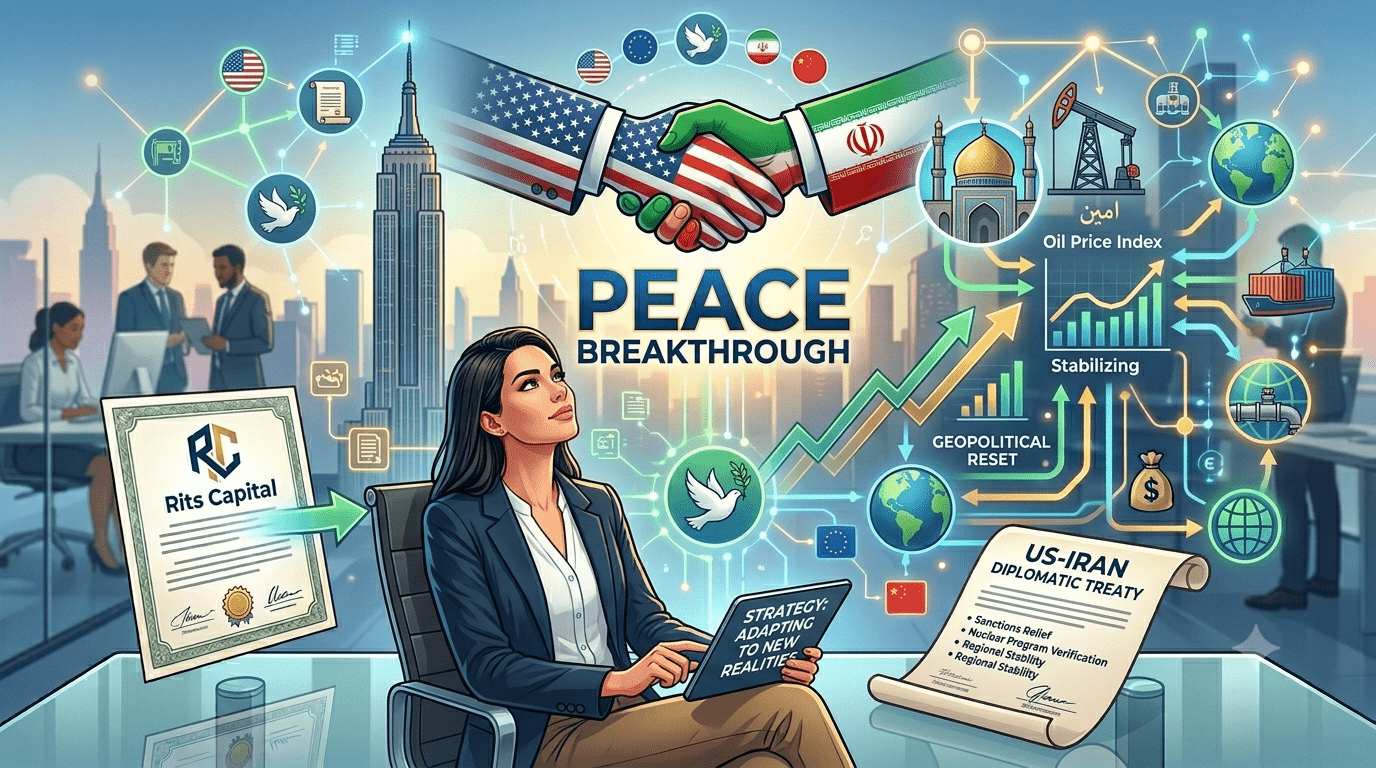
The global market has spent the last three months holding its collective breath. Since the devastating conflict erupted with coordinated strikes on February 28, 2026, the world’s primary financial arteries have been severely constricted. Record-high energy costs, fractured maritime logistics, and supply chain gridlocks left everyday people and high-net-worth investors facing the exact same question: Where is the bottom?
The answer arrived with a stunning geopolitical shift.
Following intensive mediation brokered by Pakistan and Qatar, the United States and Iran have successfully finalized a historic Memorandum of Understanding (MOU) to end the war. With the formal signing ceremony scheduled for Friday, June 19, 2026, in Switzerland, the world is shifting from a wartime footing to a major economic realignment. The market’s response has been swift—major indices shot to all-time highs while Brent crude tumbled to around $82 a barrel.
For global wealth managers and private investors, this isn’t just news to celebrate—it’s a call to actively rebalance capital. Here is how this landmark deal reshapes the investment landscape, clears the world’s most critical chokepoint, and moves us into a new macroeconomic cycle.
Clearing the Chokepoint: Reopening the Strait of Hormuz
The absolute core of this agreement—and the primary reason global markets are breathing a massive sigh of relief—is the immediate, permanent termination of hostilities and the structured reopening of the Strait of Hormuz.
The Scale of Hormuz: Separating Oman and Iran, this narrow waterway handles roughly 20% to 25% of all globally traded petroleum and liquefied natural gas (LNG). It is the indispensable transit corridor for major Gulf producers like Saudi Arabia, Iraq, Kuwait, the UAE, and Qatar.
When the conflict effectively closed the strait over 100 days ago, global logistics unraveled. Maritime transport was forced to bypass the region completely, routing thousands of miles around Africa. Beyond energy, the shockwaves hit unexpected corners of the global economy—such as the pharmaceutical industry, where India’s critical generic drug manufacturing relies heavily on petrochemical feedstocks that pass through Hormuz.
Under the newly forged framework, ships are already preparing to move. While full normalization will take time, the immediate mechanics are clear:
- Mine Removal Operations: Over the next 30 days of the 60-day implementation phase, Iranian forces will systematically clear the defensive naval mines planted during the blockade. Mainstream shipping lanes are projected to see escalating traffic by late July as insurers clear vessels for safe transit.
- The Toll-Free Mandate: In a critical announcement, President Trump confirmed via social media that the waterway will open with completely “toll-free” passage for international commercial vessels, preventing long-term regional tariffs from impacting global corporate margins.
- Broad Regional Ceasefire: Crucially, the agreement explicitly demands an immediate halt to hostilities on all regional fronts, integrating a cessation of the conflict between Israel and Hezbollah in Lebanon to ensure structural security across the entire Middle East.
The Strategic Trade-Offs: Uranium and Frozen Assets
A peace framework of this scale is built on deep structural concessions. While technical teams iron out details during the 60-day negotiation window post-signing, the foundational trade-offs of the MOU outline an unambiguous compliance structure:
- Dismantling Nuclear Inventories: Iran has committed to a complete, verifiable freeze, reaffirming it will not procure or develop nuclear weapons. Its current stockpile of enriched uranium—including approximately 440kg near weapons-grade—will be systematically diluted or disposed of on-site under strict International Atomic Energy Agency (IAEA) oversight.
- Phased Economic Relief: In exchange for absolute nuclear compliance, the U.S. is lifting its restrictive naval blockade on Iranian ports. However, any further sanctions relief, including the unfreezing of billions in overseas Iranian assets, will be tightly controlled—released in sequential phases tied directly to verifiable disarmament milestones.
Investor Playbook: Sectors Set for Realignment
As the geopolitical risk premium rapidly evaporates from global commodities, smart capital is moving out of defensive shelters and back into growth-focused equities.
1. Traditional Energy: Downstream and Midstream Pivot
A lower-for-longer outlook for spot crude prices means upstream oil and gas explorers heavily dependent on $100+ brent will face margin contraction. However, the drop in wholesale prices and the resumption of major volume transport is highly constructive for down-market players.
- Investor Strategy: Shift focus toward high-yielding midstream pipeline operators, infrastructure networks, and diversified energy conglomerates with robust balance sheets capable of handling the transition back to pre-war supply baselines.
2. Global Maritime & Logistics: The Margin Expansion
During the peak of the blockade, global shipping firms faced catastrophic insurance premiums, soaring fuel expenses from extended routes, and immense security surcharges.
- Investor Strategy: Container liners, large-scale tanker operators, and dry-bulk freight networks stand to capture immediate relief in operational expenditures. The elimination of the Hormuz risk premium will expand corporate net margins significantly over the third quarter of 2026.
3. Emerging Markets & Manufacturing hubs
Energy-importing nations—most notably India and South Korea—bore the brunt of the supply shock. High input costs for everything from agricultural fertilizers to transport fuel stoked local inflation and weighed heavily on corporate earnings.
- Investor Strategy: Broad emerging market allocations are primed for a robust structural recovery. Easing crude bills directly translate to stronger domestic fiat currencies, narrowed current account deficits, and lowered inflationary pressure for manufacturers.
Investor FAQ: Navigating the Peace Framework
How did the markets react to the peace announcement?
The response was highly risk-on. Global equity benchmarks rallied to historic highs within hours of the finalized MOU confirmation. Conversely, energy markets experienced a sharp correction, with Brent crude diving from its wartime highs down toward the low-$80s as supply safety returned to pricing models.
Is this truce structurally stable?
While the immediate operational ceasefire is holding, investors must maintain a disciplined baseline of risk mitigation. The upcoming 60-day window features complex technical negotiations regarding the verified disposal of Iran’s nuclear material. Market volatility could temporarily resurface if verification benchmarks encounter administrative delays.
What is the expected timeline for standard shipping volumes to return?
President Trump announced that ships are starting to move immediately, but reaching full pre-conflict traffic volumes will be a gradual process. The initial 30 days are dedicated to intensive mine clearing in the Strait of Hormuz. Analysts project that roughly 80% of normal crude traffic could resume by the close of Q3 2026, with full pre-war capacity firmly stabilizing into early 2027.
How will this peace deal impact inflation and central bank policies?
This breakthrough is deeply deflationary. Because the Strait of Hormuz handles roughly a fifth of global energy and key fertilizer components, its structural reopening acts as a direct release valve on global core inflation. For central banks, including the Federal Reserve, a sustained drop in energy and logistics costs may carve out the necessary economic runway to explore more accommodative monetary policy later this year.
Secure Your Portfolio with Rits Capital
Major geopolitical realignments create distinct windows of high-alpha opportunity, but they require swift, data-driven execution. As capital rotates away from defensive safe havens and flows back into expanding global trade lanes, navigating the transition requires institutional-grade oversight.
At Rits Capital, we specialize in cross-border asset management, macro risk hedging, and direct tactical rebalancing. Whether you are seeking to optimize your energy exposure, capture the rebound in global logistics, or expand your emerging market footprint, our specialized wealth advisors are here to position your capital ahead of the curve.
Ready to optimize your portfolio for the post-conflict global economy? Contact the private wealth advisory team at Rits Capital today to schedule your comprehensive macro strategy review.