

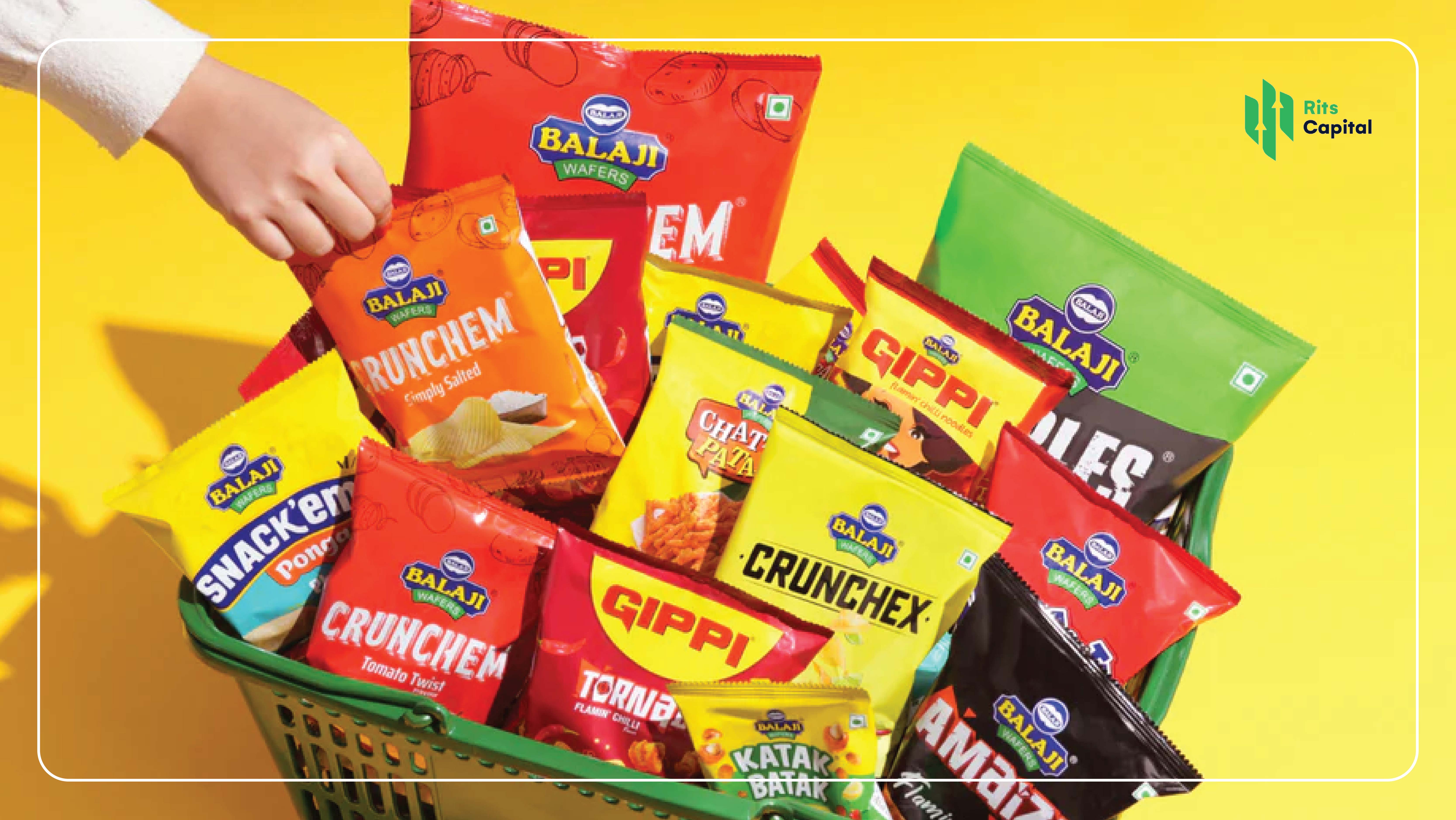
Balaji Wafers has evolved from a humble family-run business in Rajkot to a Rs. 35,000 crore powerhouse in the Indian snack industry. Its journey is a classic tale of grit, innovation, and sharp business acumen, making it a captivating case study for investors focused on FMCG and high-growth consumer brands.
Humble Beginnings and Strategic Growth
Founded in the late 1980s by the Virani brothers in Rajkot, Balaji Wafers started with just a single wafer production line, pieced together with second-hand machines and deep hands-on efforts. Despite early challenges, the founders’ obsession with quality and operational efficiency led to rapid growth. By 2002, it boasted India’s largest wafer manufacturing plant in Rajkot, fully automated for superior output and quality control.
Their core mantra, “More Chips, Less Air,” ensured value-packed, consistently crunchy snacks that resonated deeply with consumers, building brand loyalty well beyond Gujarat. Over time, the company expanded to offer over 65 products, including potato chips, namkeen, baked snacks, and extruded corn products, all maintaining a balance of innovation and affordability.
Strong Market Position and Financial Performance
As of FY24, Balaji reported revenue of approximately Rs. 5,454 crore with net profits nearing Rs. 579 crore, marking over 40% profit growth year-on-year. The EBITDA margins stand strong at around 13-15%, rivaling industry leaders like Bikaji Foods and Haldiram’s. Its net margins surpass 10%, denoting operational efficiency rare in the regional-to-national FMCG transition phase.
Balaji dominates western India’s organized snacks market—Gujarat, Maharashtra, Rajasthan—with close to a 65% market share in chips, namkeen, and bhujia. Its distribution network is a formidable competitive advantage, with over 1,300 dealers reaching 4.5 lakh kirana stores. This hands-on, retailer-friendly distribution model secures prime shelf space without massive advertising spends, keeping costs lean and prices competitive.
Recent Milestones and Investment Interest
The company enjoys strong private equity backing, with US-based General Atlantic recently acquiring a 7% stake for Rs. 2,500 crore, valuing Balaji at about Rs. 35,000 crore (~USD 4 billion). This deal signals investor confidence in Balaji’s scalability, brand strength, and growth potential. It underscores the attractiveness of India’s packaged snack market, spanning an estimated Rs. 45,000 crore market overall.
Balaji’s strategy to reinvest in tech-driven supply chains and professionalise governance further supports its ambitions to expand nationally, improve margins, and potentially go public in the coming years. The valuation—about 62 times FY24 earnings—reflects premium pricing due to consistent growth, dominant regional franchise, and lean operations.
Competitor Comparison
Balaji Wafers holds a distinct position compared to its major competitors like Haldiram’s and PepsiCo (Lay’s):
| Feature | Balaji Wafers | Haldiram’s | PepsiCo (Lay’s) |
| Market Share (India) | ~12% (3rd largest salty snacks) | ~21% (largest) | ~15% (2nd largest) |
| Revenue (FY24 approx.) | Rs. 5,454 crore | Rs. 8,000+ crore (estimated) | Rs. 7,000+ crore (estimated) |
| EBITDA Margin | 13-15% | 12-14% | 10-12% |
| Advertising Spend | ~4% of revenue | 8-12% | 8-12% |
| Distribution Reach | 4.5 lakh kiranas, 1,300 dealers | Nationwide | Nationwide |
| Brand Strategy | Value-packed, regional stronghold with national expansion | Premium and heritage brand | Global & premium branding |
| Innovation Focus | More chips, less air; new snack categories (baked, extruded) | Traditional and innovative snacks | Global flavor variants & packaging |
Balaji’s advantage lies in its lean cost structure and retailer-friendly margins, which have helped it defend and expand its market share despite larger rivals’ advertising muscle.
Read Also: Bihar Election Verdict: Will Nifty Crash or Soar?
Why Investors Should Take Note
Balaji Wafers exemplifies a well-run family business that has mastered scale, efficiency, and operational discipline while retaining brand authenticity. For investors, it offers:
- Robust revenue and profit growth backed by a powerful regional franchise.
- High operating margins uncommon in growing FMCG companies.
- Low advertising cost leading to better EBITDA conversion.
- Smart market expansion plans through technology investments.
- Strong private equity endorsement with recent sizeable stake sell-downs.
- Potential IPO on the horizon, likely at premium multiples.
Explore more high-growth unlisted opportunities with Rits Capital.
Faq’s:
- What drives Balaji Wafers’ superior profit margins despite low advertising spend?
Efficient distribution, cost control, and retailer-friendly margin strategies help retain profits while enabling competitive pricing.
- How significant is Balaji’s distribution network in its success?
Its extensive reach of 1,300 dealers and over 4 lakh kiranas ensures availability and shelf prominence, essential for FMCG success.
- What makes Balaji’s valuation attractive to private equity investors?
Consistent high growth, strong profitability, regional dominance, and manageable expansion risk contribute to its premium valuation.
- Who are Balaji’s main competitors and how does it compare?
Key competitors include Haldiram’s and PepsiCo. Balaji competes through lean costs, regional strength, and product innovation.
- What are the growth plans post recent PE investment?
Expanding product categories, investing in tech-driven supply chain efficiency, and national market penetration are core focus areas.
- Is Balaji planning an IPO soon?
Industry reports suggest a potential listing within the next few years, depending on market conditions and business scaling.
- How has Balaji’s revenue and profit trended recently?
FY24 revenue stood at Rs. 5,454 crore with Rs. 579 crore net profit, showing over 40% profit growth YoY.
- What is the significance of the ‘More Chips, Less Air’ tagline?
It reflects the brand’s commitment to delivering more product value and satisfying crunch at affordable prices, resonating with consumers.
- How does Balaji ensure product quality and innovation?
Fully automated factories, technical investment, and continuous product range expansion across categories fuel quality and innovation.
- What risks should investors watch for?
Geographic concentration risks, raw material price volatility, and competition from established global players are key risks.